
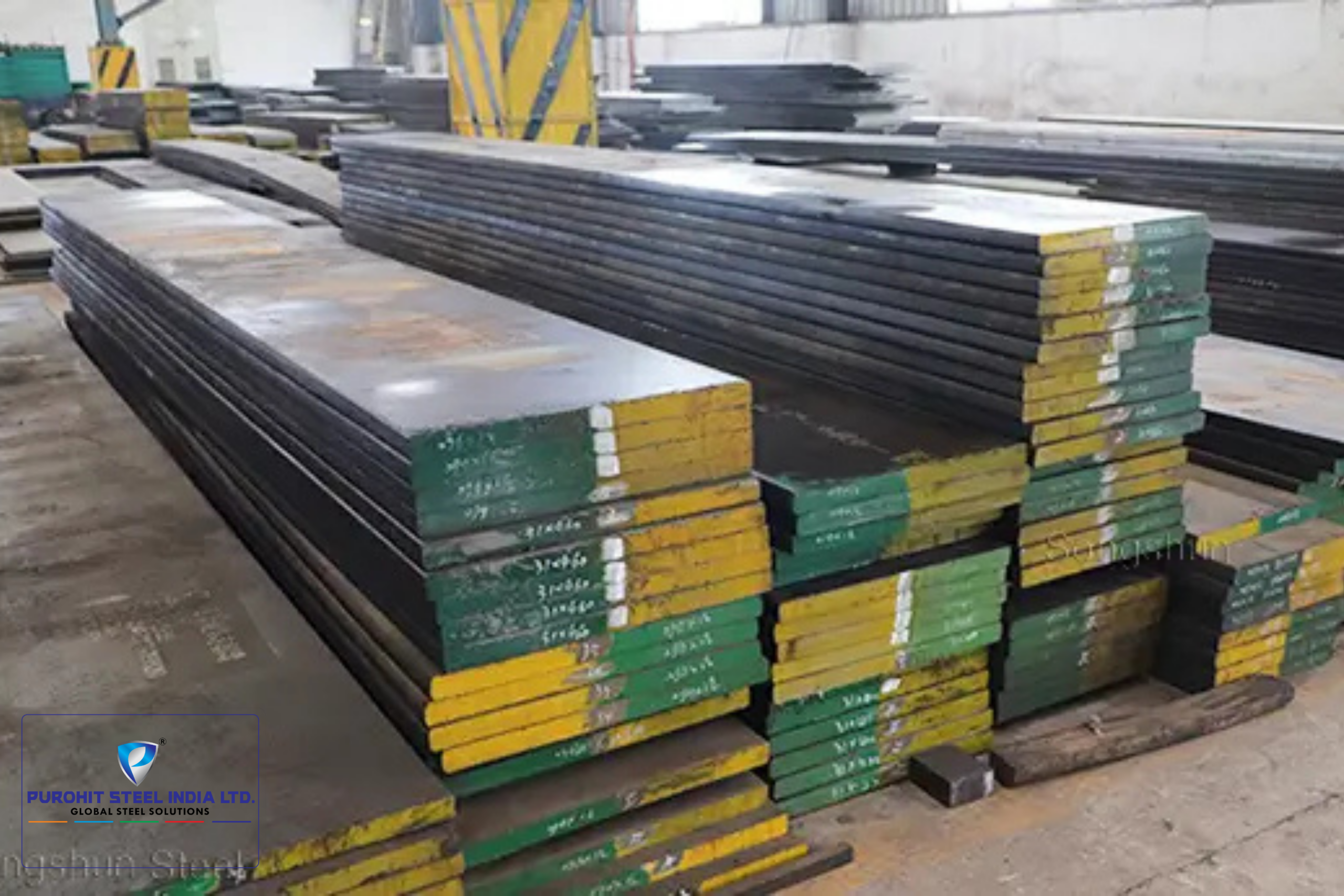
Grade O2/ 1.2842
Grade O2/ 1.2842/ 90MnCrV8, is an oil-hardening cold work tool steel recognized for its excellent machinability, uniform hardness, and high dimensional stability during heat treatment.
It is widely used for precision tools and cutting instruments that require fine edges and dependable wear resistance.
O2 is slightly modified compared to O1, offering improved toughness and stability, making it especially suitable for punches, gauges, and tools needing tight tolerance control.
Key Properties of O2/ 1.2842
1. Excellent Machinability
O2 is one of the most machinable cold work tool steels.
Easily milled, turned, ground, and polished – perfect for intricate tooling.
2. Uniform Hardening & Easy Heat Treatment
Hardened by oil quenching, O2 achieves 58–62 HRC, with very low distortion.
This makes it suitable for:
a. close-tolerance parts
b. precision gauges
c. fine-edge cutting tools
3. High Dimensional Stability
O2 distorts less than many tool steels during hardening.
This makes it excellent for tools requiring exact sizes after heat treatment, such as measuring equipment and dies.
4. Good Wear Resistance
While not as wear-resistant as D2 (high-chromium), O2 performs consistently in medium-load cutting, punching, and shearing applications.
5. Good Toughness
Balanced alloying gives O2 higher toughness compared to D3 or other high-carbon chromium steels.
Less prone to chipping and cracking under moderate shock.
6. Fine Edge Retention
O2 produces a sharp, stable edge, ideal for:
a. woodworking tools
b. industrial blades
c. craft and fabrication knives
Common Applications
1. Punches, dies & blanking tools
2. Shear blades
3. Gauges, jigs & fixtures
4. Industrial cutting and trimming tools
5. Woodworking chisels and plane blades
6. Knives (industrial, custom, and craft knives)
7. Reamers, broaches, taps
8. Measuring tools requiring tight tolerances
Summary
Grade O2/ 1.2842 is a high-performance, oil-hardening tool steel offering a superior mix of machinability, stability, and cutting performance. Its low distortion and uniform hardness make it a preferred choice for precision tools, punches, dies, and knives where accuracy and reliability are critical.