
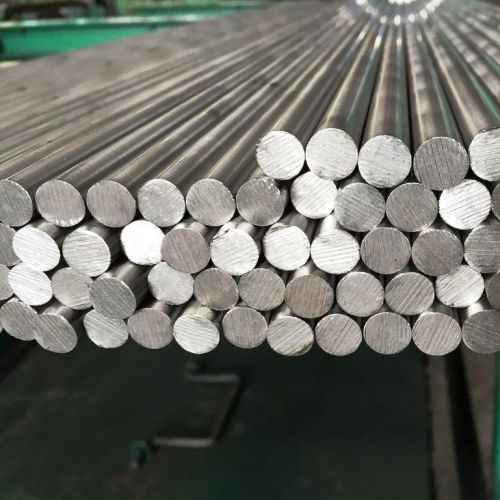
Grade EN31
Key Properties of EN31
1. Very High Hardness
After proper heat treatment (quenching + tempering), EN31 achieves:
a. 60–66 HRC surface hardness
b. High wear resistance
c. Excellent compressive strength
2. Excellent Wear Resistance
Ideal for rolling, sliding, and impact wear applications.3. High Strength & Fatigue Resistance
Suitable for high-load rotating parts like bearings, cams, and rollers.4. Moderate Toughness
Better than plain carbon steels but not as high as alloy steels like EN19 or EN24.5. Dimensional Stability
Maintains accuracy after heat treatment, important for bearing and tool components.6. Medium Machinability
Machinability is good in annealed condition; difficult after hardening.7. Poor Weldability
Due to high carbon content, EN31 is generally not recommended for welding.Typical Applications of EN31
EN31 is widely used in automotive, engineering, machinery, tool room, bearing manufacturing, and textile industry.Typical applications include:
1. Ball bearings, roller bearings & bearing races
2. Needle rollers & bushes
3. Gears & pinions
4. High-wear automotive parts
5. Shafts, axles & spindles
6. Precision measuring tools
7. Punches, dies & forming rolls
8. Tappets, cams & cam followers
9. Knives, blades & cutting tools
10. Ball screws & linear motion components
11. Press tools & machine tool parts
Heat Treatment Capabilities
1. Annealed: 200–250 Brinell
2. Hardened & Tempered: 58–66 HRC
3. Core Toughness: Moderate
4. Case Hardening: Possible if required
EN31 offers one of the best combinations of hardness + wear resistance in commercial engineering steels.
Why Choose EN31?
Choose EN31 when your application requires:
1. Extremely high hardness
2. Superior wear resistance
3. High load-bearing capacity
4. Dimensional accuracy
5. Long service life in frictional components
It is the standard grade for bearings and high-wear tools.