
Purohit Steel is a leading Grade VR 400 ESR Stockist and Exporter in India, supplying electroslag-remelted (ESR), NLMK Verona pre-hardened plastic mould steel with verified chemical composition, mechanical properties and full traceability for mould makers, OEMs and tooling houses producing high-gloss and optical-grade components.
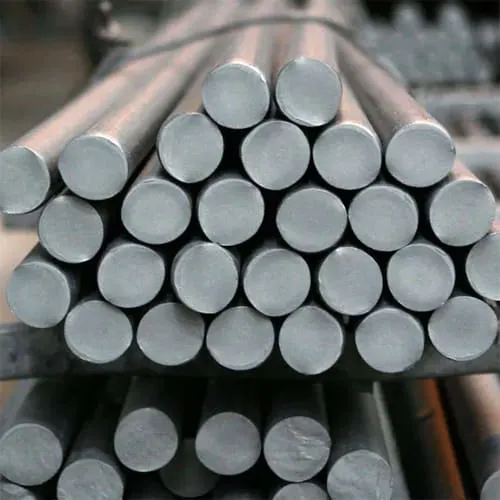
As an ISO-certified company established in 1965 and an authorized NLMK Verona stockist, we maintain ready stock of Grade VR 400 ESR in round bar, flat bar and block form, with in-house bandsaw cutting, machining, grinding and EDM support for fast turnaround across India and export markets.
Table of Contents
- 1. What is Grade VR 400 ESR Steel
- 2. Why Purohit Steel for VR 400 ESR
- 3. Comparison: VR 400 ESR vs VR 400 vs 1.2083 ESR
- 4. Chemical Composition
- 5. Mechanical Properties
- 6. Physical & Thermal Properties
- 7. Grade Positioning vs Standard Grades
- 8. Heat Treatment Guidelines
- 9. Available Forms & Sizes
- 10. Machining & Selection Notes
- 11. Applications & Uses
- 12. Industries We Serve
- 13. Related Products
- 14. Authorized Stockist Brands
- 15. Cities We Supply in India
- 16. Our Services
- 17. Frequently Asked Questions
- 18. About Purohit Steel
What is Grade VR 400 ESR Steel?
Grade VR 400 ESR is the electroslag-remelted (ESR) version of NLMK Verona's VR 400 pre-hardened plastic mould steel. It shares the same base chromium-manganese-molybdenum-nickel-vanadium chemistry as standard VR 400, but is additionally refined through the ESR process — remelting the steel through a molten slag layer — which removes non-metallic inclusions and produces an ultra-clean, fine-grained, more homogeneous microstructure.
This refinement translates directly into practical mould-making benefits: improved fatigue resistance, better through-hardness consistency, and superior response to mirror-polishing and optical-grade finishing. Like standard VR 400, it is supplied in a pre-hardened (quenched and tempered) condition of approximately 360-390 HB (38-42 HRC), removing the need for further heat treatment before machining and maintaining excellent hardness uniformity across thick sections up to 600 mm.
VR 400 ESR offers high toughness and good machinability at its hardness level, along with nitriding capability (up to roughly 58-60 HRC surface hardness) for enhanced wear resistance, and good weldability for repair and modification — making it a preferred choice wherever surface finish and dimensional consistency are critical to the moulded part.
Note: VR 400 ESR is an NLMK Verona proprietary grade designation, not a DIN, AISI or GB standardized grade — see Grade Positioning below, and the comparison table for how it differs from standard (non-ESR) VR 400 and from the stainless-type 1.2083 ESR grade.
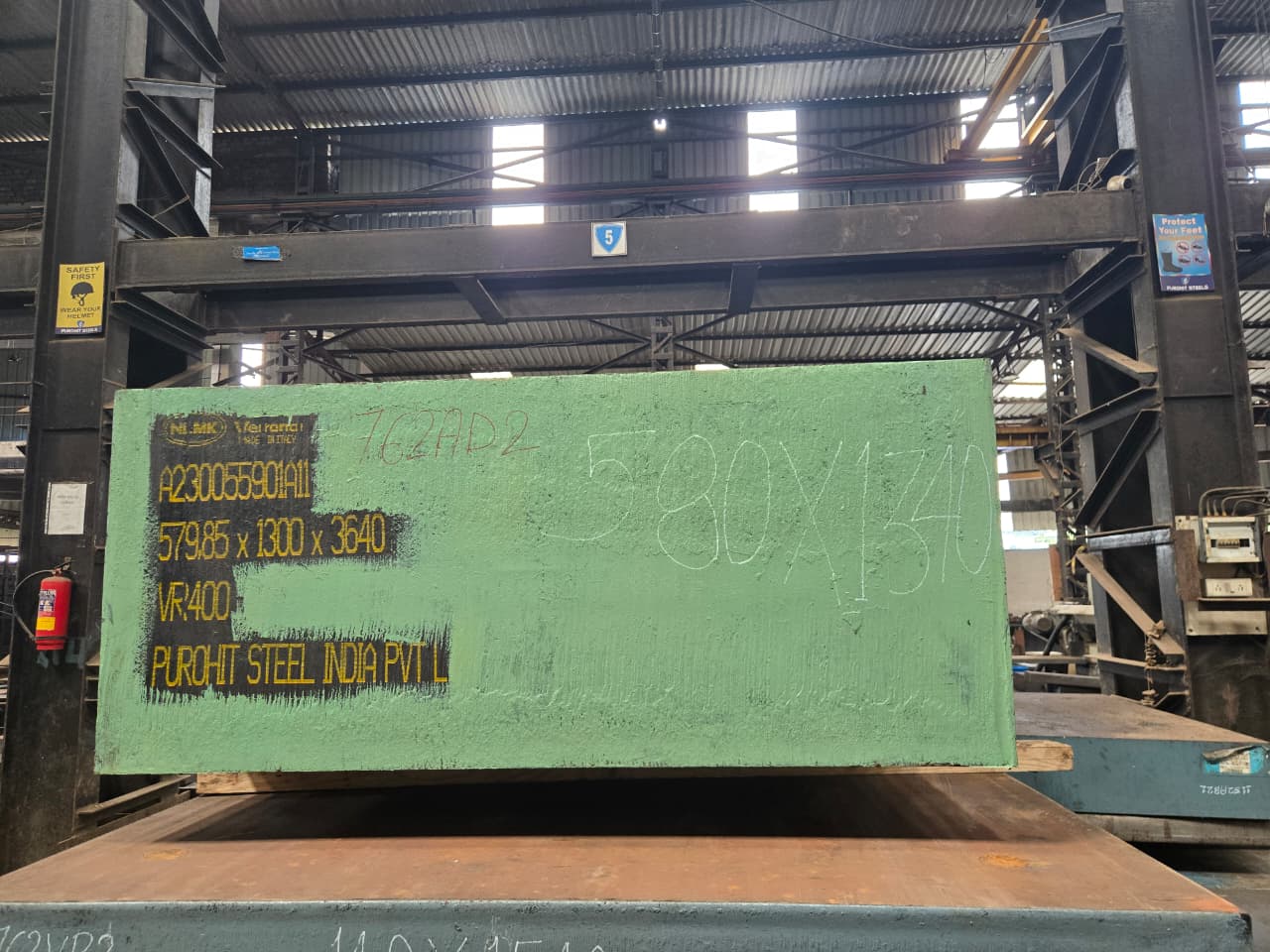
Why Purohit Steel for Grade VR 400 ESR
- Authorized NLMK Verona Stockist: Genuine ESR-refined VR 400 ESR sourced directly through NLMK Verona's authorized supply chain
- Ready Stock: Round bar, flat bar and block sizes held in inventory for immediate dispatch
- ISO-Certified Quality: Documented quality management since 1965
- Value-Added Machining: In-house bandsaw cutting, precision machining, grinding, drilling, gun drilling, EDM and wire-cut
- Technical Support: Assistance with grade selection, heat treatment guidance and positioning against standard and ESR grades
- Pan-India & Export Supply: Warehousing in Vasai with a sales outlet in Mumbai, serving customers across India and international markets
- Export-Ready Packaging: Palletised, moisture-protected packing suitable for both domestic transport and export shipment
Comparison: VR 400 ESR vs VR 400 vs 1.2083 ESR
The table below compares the ESR-refined VR 400 ESR against its non-ESR base grade and against another ESR-refined mould steel with a different (stainless-type) chemistry, to help select the right material for the application.
| Factor | VR 400 (non-ESR) | VR 400 ESR | 1.2083 ESR |
|---|---|---|---|
| Refinement process | Conventional air melt | Air melt + Electroslag Remelting (ESR) | Air melt + Electroslag Remelting (ESR) |
| Base chemistry | Cr-Mn-Mo-Ni-V alloy steel | Same Cr-Mn-Mo-Ni-V alloy steel, ESR refined | High-chromium (~13%) stainless-type steel |
| Supply hardness | 360-390 HB (38-42 HRC) | 360-390 HB (38-42 HRC) | 290-330 HB |
| Cleanliness / inclusion content | Standard commercial cleanliness | Significantly reduced non-metallic inclusions, ultra-clean microstructure | Significantly reduced non-metallic inclusions, ultra-clean microstructure |
| Corrosion resistance | Low | Low | High |
| Toughness & fatigue behaviour | Good, standard for the grade | Improved impact toughness and fatigue resistance vs. the non-ESR base grade | Good, refined by ESR |
| Polishability / surface finish | Outstanding, mirror-finish capable | Superior, mirror and optical-grade finish capable | Superior, optical-grade finish capable |
| Best suited for | High-hardness large moulds, cost-sensitive projects | High-gloss, optical-grade and fatigue-critical precision moulds | Moulds for corrosive plastics, humid/food/medical environments |
| Relative cost | Medium-high | High | Highest |
Grade VR 400 ESR Chemical Composition
Typical base composition per NLMK Verona manufacturer technical literature (weight %) — the same alloy system as standard VR 400, additionally refined by the ESR process:
| Element | Symbol | Composition (%) |
|---|---|---|
| Carbon | C | 0.25 - 0.35 |
| Silicon | Si | 0.10 max |
| Manganese | Mn | 1.40 - 1.60 |
| Chromium | Cr | 1.20 - 1.40 |
| Molybdenum | Mo | 0.55 - 0.75 |
| Nickel | Ni | 1.00 - 1.20 |
| Vanadium | V | 0.10 - 0.15 |
| Iron | Fe | Balance |
The Electroslag Remelting process itself reduces sulphur content and non-metallic inclusion levels versus the non-ESR base material, without materially changing the bulk alloy percentages above. VR 400 ESR is a proprietary NLMK Verona grade, not a DIN/AISI/GB standardized designation, so figures should be confirmed against the mill test certificate for critical applications. Mill test certificates (EN 10204 2.2 / 3.1) are available on request.
Mechanical Properties of Grade VR 400 ESR
Typical characteristics in the as-supplied, pre-hardened (quenched & tempered) condition:
| Property | Typical Value |
|---|---|
| Hardness (supply condition) | 360 - 390 HB (approx. 36 - 40 HRC), pre-hardened |
| Hardness uniformity | Excellent through-thickness uniformity, verified up to 600 mm section thickness |
| Cleanliness | Ultra-clean, ESR-refined microstructure with reduced non-metallic inclusions |
| Toughness & fatigue resistance | Improved impact toughness and fatigue resistance versus standard (non-ESR) VR 400 |
| Machinability | Good for its hardness range |
| Polishability | Superior — mirror and optical-grade finish, strong response to texturing and laser engraving |
| Weldability | Good, suitable for repair and modification with correct pre-heat and post-weld stress relief |
| Nitrided Surface Hardness | Up to 58 - 60 HRC |
Characteristics are typical for material supplied in the standard pre-hardened condition and can vary with section size and mill batch. As VR 400 ESR is a proprietary NLMK Verona grade, exact tensile/yield/elongation figures should be confirmed via mill test certificate for critical design work; certificates (EN 10204 2.2 / 3.1) are available on request.
Physical & Thermal Properties
| Property | Value |
|---|---|
| Density | 7.80 g/cm³ |
| Thermal Conductivity (room temp., typical for this alloy class) | ~28 - 30 W/(m·K) |
| Coefficient of Thermal Expansion (20-200°C) | ~12 × 10-6 /K |
| Specific Heat Capacity | ~460 J/(kg·K) |
| Electrical Resistivity (room temp.) | ~0.50 µΩ·m |
Values are typical for alloy tool steels of this composition class (higher Mo/Ni/V content than plain P20 grades). ESR refinement improves microstructural homogeneity but does not materially change these bulk physical constants. Confirm exact figures against mill documentation for critical thermal design.
Grade Positioning vs Standard Grades
VR 400 ESR is an NLMK Verona proprietary grade — it does not carry a direct DIN (Werkstoffnummer), AISI/SAE or GB standardized equivalent, so we do not claim one. What can be stated with confidence is how ESR refinement positions it relative to the non-ESR base grade and other refined mould steels Purohit Steel stocks:
| Grade | Refinement | Typical Supply Hardness | Distinguishing Trait |
|---|---|---|---|
| 1.2738 (P20+Ni) | Conventional air melt | 300 - 340 HB | Standard baseline P20+Ni grade |
| VR 400 | Conventional air melt | 360 - 390 HB | Higher Mo/V/Ni alloy for higher hardness & uniformity |
| VR 400 ESR | Air melt + ESR | 360 - 390 HB | Same alloy as VR 400, ESR-refined for cleanliness, toughness & optical-grade finish |
| 1.2083 ESR | Air melt + ESR | 290 - 330 HB | Different (stainless) chemistry, ESR-refined, corrosion resistant |
This is a chemistry- and process-based positioning, not a claim of standard-grade equivalence — see the comparison table above for a fuller technical breakdown.
Heat Treatment Guidelines
| Process | Guideline |
|---|---|
| Supply condition | Quenched & tempered (pre-hardened) 360-390 HB — ready to machine, no further heat treatment normally required |
| Stress relieving (after heavy machining) | 550-600°C, hold approx. 2 hrs, furnace or air cool |
| Softening / annealing (if re-machining softer stock is required) | Heat to 710-740°C, cool slowly in furnace (≤20°C/hr) — consult mill data before annealing, as this removes the pre-hardened supply condition |
| Hardening (if a different hardness is required) | Preheat ~650°C, austenitize 840-870°C, hold 20-30 min, quench in oil, per mill technical datasheet |
| Tempering | Double temper per target hardness, 2 hrs each cycle, air cool between tempers |
| Nitriding (optional, for wear surfaces) | Gas or plasma nitriding to approx. 58-60 HRC surface hardness with a tough core |
Available Forms & Sizes
- Round Bars
- Flat Bars / Plates
- Blocks
- Custom sizes cut to drawing via in-house bandsaw cutting
Material is machined, ground, drilled and finished in-house through our precision machining, grinding, drilling, gun drilling, EDM and wire-cut facilities, so blocks can be supplied close to finished dimensions.
Machining & Selection Notes
- Cutting tools: At 360-390 HB, VR 400 ESR machines well with coated carbide tooling at moderate cutting speeds; adequate coolant and rigid setups are recommended to avoid local heat build-up.
- Cavity & optical surfaces: Rough and semi-finish deep cavities before final finishing passes; the ESR-refined cleanliness reduces the risk of surface pits or streaks appearing during final mirror polishing.
- Welding / repair: Good weldability for its hardness class; preheat to 150-200°C and stress-relieve after welding to reduce cracking risk.
- Polishing & texturing: The ESR-refined microstructure gives superior, more consistent response to mirror polishing, fine texturing and laser engraving than the non-ESR base grade.
- Grade selection: Choose VR 400 ESR where optical-grade or high-gloss finish and fatigue resistance are essential; use standard VR 400 where the ESR premium is not required — see the comparison table above.
Applications of Grade VR 400 ESR Steel
VR 400 ESR is used across precision plastic mould manufacturing in India and export markets, wherever surface finish, fatigue resistance and dimensional consistency are critical to the moulded part.
- High-gloss injection moulds
- Transparent plastic moulds (optical parts, lenses, covers)
- Automotive interior and exterior moulds
- High-precision blow moulds
- Medical device moulds
- Electronic housing components
- Packaging industry moulds
- Moulds requiring deep texturing or laser engraving
- Large mould bases needing high hardness uniformity
Grade VR 400 ESR for Mould Making
In mould making, VR 400 ESR is preferred where the non-metallic inclusion count of standard mould steel could compromise a mirror or optical-grade finish, or where fatigue life under repeated high-pressure injection cycles is a key design factor.
Automotive & Electronics Industries
VR 400 ESR is used for automotive interior/exterior trim and lighting component moulds, and for electronic housing and consumer product moulds, where cosmetic surface quality and long-term dimensional stability are critical.
Industries We Serve
- Automotive industry
- Plastic injection moulding industry
- Packaging manufacturing
- Medical device manufacturing
- Electronics & consumer goods production
- Engineering & tooling workshops
Authorized Stockist



Grade VR 400 ESR Supply Locations Across India
We supply Grade VR 400 ESR steel across major industrial cities including Mumbai, Pune, Khopoli, Nashik, Aurangabad, Navi Mumbai, Palghar, Umbergaon, Vapi, Valsad, Daman, Vadodara, Ahmedabad, Rajkot, Hyderabad, Bangalore, Chennai, Cochin, Delhi, Gurgaon, Manesar and Sonipat — as well as to export markets.
Our Steel Products
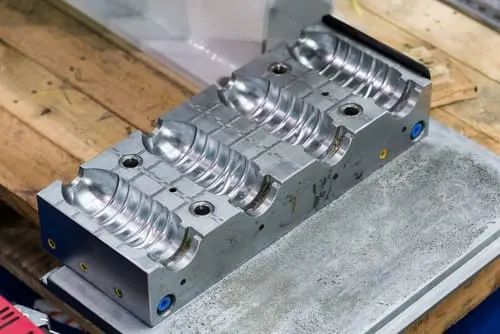
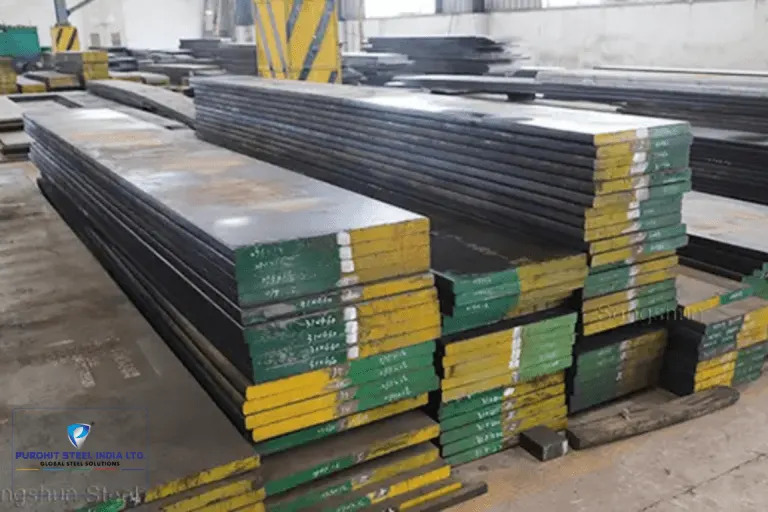
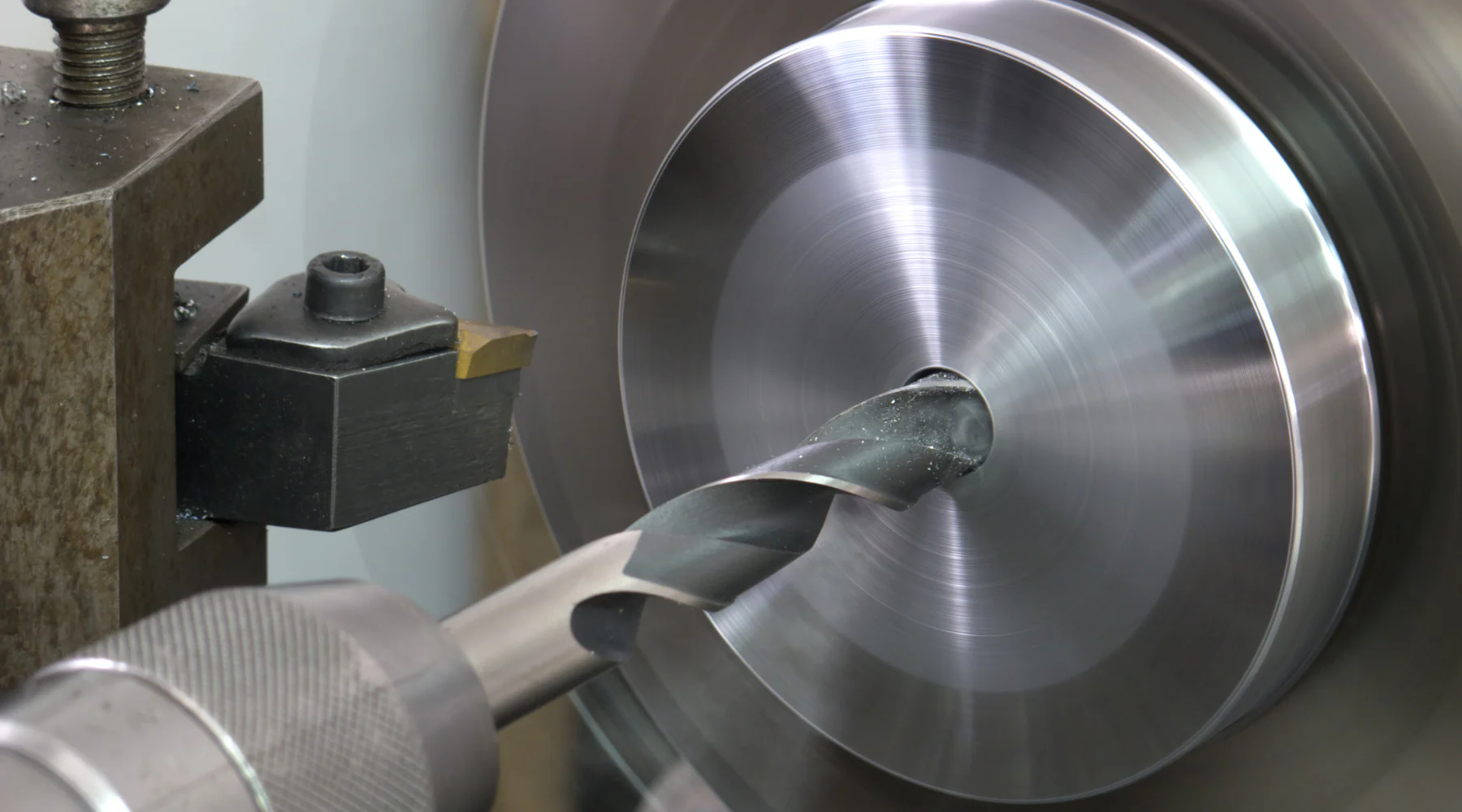
Our Services
Frequently Asked Questions
About Purohit Steel
Purohit Steel was established in 1965 by Shree Bherumalji Rajpurohit, a visionary in metallurgy. Over the decades, we have built a strong reputation as a trusted stockist and exporter of tool steel, plastic mould steel and engineering steel products across India.
As an ISO-certified company, we source premium materials from globally reputed manufacturers, including our authorized stockist relationship with NLMK Verona for grades such as VR 400 ESR, and operate a modern warehousing facility in Vasai along with a sales outlet in Mumbai, enabling efficient storage, fast processing and timely delivery across India and export markets.
With decades of relationships with tool & die manufacturers and a customer-focused approach, Purohit Steel continues to deliver reliable, technically supported steel solutions for the mould-making industry.
Read more about Purohit Steel, view our certifications, or get in touch with our technical sales team.